 |  |
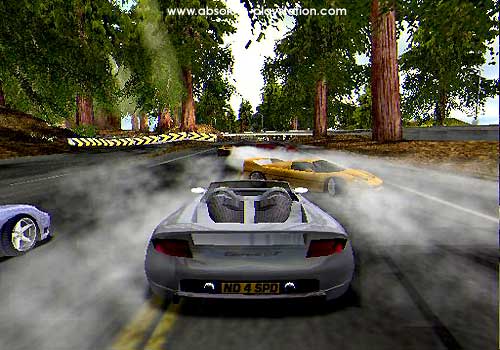
(Above left) Need For Speed 3: Hot Pursuit gameplay (Above right) Need For Speed Most Wanted screenshot
Need For Speed (NFS) is a series of racing video games developed by EA black box and published by Electronic arts. The series was originally developed by Distinctive Software, which became known as Ea Canada. The series debuted with The Need For Speed in North America, Japan, and Europe in 1994. Initially, the series was exclusive to the fifth generation consoles and was featured in all of the seventh generation games consoles by 2008.
The games consist mainly of racing with various cars on various tracks, and to some extent, include police pursuits in races. In Japan, the series was released as Over Drivin. After the release of Need For Speed: High Stakes, it adopted the western name. Since Need For Speed: Underground, the series has fitted car body customization into gameplay. Currently, there are four games under development in the series.
The Need for Speed (1994)
Most cars and tracks are available at the beginning of the first game, and the objective is to unlock the remaining locked content by winning tournaments. The first version featured chases by police cars which remained a popular theme throughout the series - the so-called Hot Pursuit editions (Need for Speed III: Hot Pursuit, Need for Speed: High Stakes, Need for Speed: Hot Pursuit 2, Need for Speed: Most Wanted, Need for Speed: Carbon and Need for Speed: Undercover) have sold better in the marketplace than intervening versions. The initial version also featured an obnoxious opponent who taunted the player if the computer won the race or the player is arrested (if the player is ticketed several times).
The first installment of the NFS was one of only two serious attempts by the series to provide a realistic simulation of car handling and physics without arcade elements (the other being Porsche Unleashed). Electronic Arts teamed up with automotive magazine road & track to match vehicle behaviour, including the mimicking of the sounds made by the vehicles' gear control levers.
Another version of the game, called The Need for Speed: Special Edition, is based on the 1995 PC release of the game, and was released only for PC CD-ROM in 1996. It featured two new tracks, and various enhancements in the game engine.
The Need for Speed and its Special Edition are the only games in the series to support DOS, as subsequent releases for the PC only run on Microsoft Windows 95 or above.
Need for Speed II (1997)
Need for Speed II featured some of the rarest and most exotic vehicles ever available, including the Ford Indigo concept vehicle, and features country-themed tracks from North America, Europe, Asia and Australia. A new racing mode was also introduced in NFS II dubbed Knockout, where the last racers to finish laps will be eliminated until the only leading racer remains, and wins.
Forgoing the realism of the first Need for Speed, NFS II provided a more arcade-like gameplay style, while maintaining the intricately designed levels. In addition, track design was more open-ended; players could now "drive" off the asphalt, and even cut across fields to take advantage of shortcuts.
The PlayStation port of NFS II is the first PlayStation game to take advantage of not only the NeGcon controller, but both the Dual analog and the DualShock controllers as well.
The special edition of NFS II includes one extra track, and extra cars.
Need for Speed: V-Rally (1997)
When the rights to release Eden studios' V-Rally (a European game) in North America were acquired by Electronic Arts in late 1997, they attached the Need For Speed name to it in order to increase its visibility.
Need for Speed III: Hot Pursuit (1998)
NFS III took advantage of the multimedia capabilities of the CD-ROM by featuring audio commentary, picture slideshows and music videos. This game also is the first in the series to allow the downloading of additional cars from the official website. As a result, modding communities have sprung up to create more vehicles which would otherwise be unavailable to the game. The PC version is also the first game in Need for Speed series to support hardware 3D acceleration.
Need For Speed: V-Rally 2 (1999)
V-Rally 2 (also known as Test Drive V-Rally for the U.S. Sega Dreamcast release and Need for Speed: V-Rally 2 for its U.S. PlayStation release) is a rally racing video game and sequel to V-Rally. It is succeeded by V-Rally 3.
Need for Speed: High Stakes (1999)
High Stakes (North America title), also known as Road Challenge (European title), was released in the summer of 1999.
High Stakes introduced several new types of gameplay: High Stakes, Getaway, Time Trap, and Career. High Stakes is a racing mode (within Career) in which the reward was the losing player's car. Getaway requires the player to outrun many pursuing police vehicles for a given time period. Time Trap is where the racer has to finish a certain amount of laps within the time limit, with police cars trying to slow them down. Career mode incorporates a monetary reward system that allows a player to purchase vehicles and performance upgrades while earning cash by racing in a chronological set of tournaments. It is also the last game in the Need for Speed series for PC to feature the Split Screen two player mode introduced in Need for Speed II.
Another innovation is the introduction of damage models. Vehicles which have been involved in accidents featured visibly crushed car bodies and suffered from performance penalties. After a race in Career mode, the player is given the option to purchase repairs. The mode also allows players, for the first time, to upgrade cars, although the feature simply consists of switching between three upgrade levels for each car.
The Playstation version of the game, released some months before the PC version, features improved gameplay. Only all-new tracks were implemented without the additional rehashes from NFS III in the PC version. Additionally, the AI in the game was more advanced; the five AIs known as Nemesis, Bullit, Frost, Ranger, and Chump featured different driving characteristics (ie. Nemesis would hound the player until a slipup occurs, whilst Bullit exhibits a more aggressive style, occasionally ramming into the player's vehicle). Also, The Aston Martin DB7 was in the game at release while the PC version required that you would need to download it online to put it in the game. In the Playstation version, the Mclaren F1 GTR was based on the 1997 Long Tail while the PC version was based on the original 95/96 version.
Need for Speed: Porsche Unleashed (2000)
In terms of game construction, it is most often hailed as Need For Speed's best collaborated effort to bring forth one singular car brand and amplify and deepen the depth of knowledge both on history and motor functions. It features historical videos and many pictures of old photos of Porsche vehicles. The Evolution concept was a hit for many people, creating many new Porsche fans due to the game's high level of academia and depth of Porsche cars. The Factory Driver was also a different kind of unlocking, except to do with performing and excelling in certain slaloms, speed races, deliveries, etc.
Motor City Online (2001)
Although officially bearing no Need for Speed prefix, Motor City Online was an MMOG variation of Need for Speed released by EA Games on October 2001, featuring mostly American coupes and muscle cars from the 1930s to the 1970s. The game allowed players to pit each other in several modes of racing through the Internet, and were allowed customization of the player's driver, garage and vehicles. Motor City Online officially shutdown and went offline on August 29, 2004.
Need for Speed: Hot Pursuit 2 (2002)
Need for Speed: Hot Pursuit 2 was the debut Need for Speed title from the newly formed EA black box (created after the purchase of Black Box Games in Vancouver), and the first Need For Speed for the Sixth generation of consoles. Hot Pursuit 2 draws primarily from the gameplay and style of NFS III; its emphasis was on evading the police and over-the-top tracks featuring lengthy shortcuts. Although the game allowed players to play as the police, the pursuit mode was drastically less realistic than preceding versions of NFS; players merely needed to "tap" a speeder a certain number of times to arrest them, as opposed to using actual police tactics such as the PIT maneuver to immobilize a speeding vehicle.
This was the first Need For Speed version since the start of the series that did not feature a true "in the driving seat" camera view, complete with steering wheel, dashboard etc. In some ways this can be considered to be the landmark in EA's move from realistic racing to arcade street racing.
Different versions of the game were produced for each game platform; the Xbox, Gamecube and PC versions were developed in EA Seattle, while the PS2 version was developed by Black Box Games in Vancouver.
Need for Speed: Underground (2003)
Need for Speed: Underground supposed a shift from semi-professional racing and isolated circuits to the street racing style of other arcade racing series: all circuits are now part of a single map, Olympic City, except for drifts. This game introduced three new play modes (Drag, Drift and Sprint) and tuning with more options than in the previous attempt, High Stakes. Underground was also the first game in the series to feature a story, told via Pre-rendered videos.
Most of the new elements in Underground have become defining marks of later installments in the Need for Speed series.This was the first Need for Speed to require Hardware Texture and Lighting in Graphics Cards.
Need for Speed: Underground 2 (2004)
Need for Speed: Underground 2, the sequel to the commercial hit Need for Speed: Underground, was released on November 15th 2004.
In Underground 2, the story continues, but there are new racing modes such as the Underground Racing League and Street X, new and more tuning options, as well as a new method of selecting races—just driving around the city (Similar to Midnight Club II) and selecting race "beacons". Also included is an "outrun" mode where a player can challenge random opponents on the road and the race leader will attempt to distance themselves away from the opponent to defeat the opponent. Underground 2 also introduces several SUVs, which could be customized as extensively as other Underground 2 vehicles and used to race against other SUV racers.
The customization features in the game were significantly expanded to modifications that have no actual effect on vehicle performance. The sound systems, for example, could be put in the trunk of cars, but served no purpose other than sheer flash. The game also features more extensive product placement for companies with no connection to auto racing, such as integrating the logo for cingular wireless, an American wireless communications company, into the game's messaging system and displaying it on-screen for much of the gameplay.
The performance and handling of the car is not only affected from "performance shops", but cosmetic modifications, like spoilers and hoods, also affect the downforce of the car.
Need for Speed: Underground Rivals was the first need for speed game released on the PlayStation Portable it is also the PlayStation Portable equivalent of Need for Speed: Underground 2. It was released on February the 24th 2005 in Japan, March 14th, 2005 in North America and September 1st 2005 in Europe.
Need for Speed: Most Wanted (2005)Need for Speed: Most Wanted was released on November 15th 2005, and is one of the first games released for the Xbox 360. Police chases make a comeback and represent a significant body of the gameplay, and includes the Grand Theft auto-like free-roaming, but with less extensive vehicle customization features than in the Underground series. The story mode is presented in a significantly different style from Underground, with CGI effects mixed with live action, which was used in later games. The mode also features the Blacklist, a crew consisting of 15 racers that the player must beat one-by-one to unlock parts, cars, and tracks. The player has to meet certain requirements before he can take on the next Blacklist rival.
A special "Black Edition" of Most Wanted was also released, which features additional races and challenges, and a few bonus cars, including a specially-tunedBMW E-46 (M3) GTR , a 1967 Chevrolet Camaro, a red Chevrolet Corvette C6.R, a Porsche, and a few others, and also includes a Black Edition-only behind-the-scenes DVD. Both versions of Most Wanted are available for the PlayStation 2, Xbox, Nintendo DS, and Windows-based PCs. Only the standard edition of Most Wanted is available for GameCube and Xbox 360 ("Black Edition" was not produced for these platforms). Black Edition was made for the tenth anniversary of the Need for Speed series.
The PSP port of Need for Speed: Most Wanted is Need for Speed: Most Wanted 5-1-0
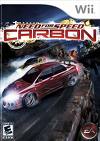
Need for Speed: Carbon (2006)Need for Speed: Carbon saw the return of nighttime-only racing, and a selection of cars similar to that of Most Wanted, including Compact Cars, sports cars associated with import culture, American muscle cars, and supercars. Carbon also introduces a new feature wherein the player is allowed to form a "crew," to which members with different abilities may be chosen that aid the player in races. Drift events returned to the series in Carbon. Also it continues the story of the player from NFSMW.
The game was released on November 1st 2006 for Windows-based personal computers, followed by video game consoles and handheld game consoles. Carbon's handheld port is known as Need For Speed Carbon: Own The City. Drag racing was removed from the series, but a new type of race called "Canyon Duel" was added, where the player and a game boss take turns racing down a canyon, trying to stay as close to the leader as possible.
Another new feature is "Autosculpt", which allows players to custom-fabricate their own ground effects, rims, hoods, and other parts. The Wii port lacked online play, but made full use of the Wii Remote and Nunchuk.
Collector's Edition The Need for Speed: Carbon Collector's Edition features 4 exclusive cars, 10 pre-tuned cars, 6 new races, 3 unique challenge events, 10 unique vinyls and a Bonus DVD showing the making of Carbon and showcasing all the cars used in the game. The Collector's Edition also features alternate box art and metallic finish packaging. Although the Mac edition doesn't display the Collector's Edition title, it contains all Collector's Edition features.
Need for Speed: ProStreet (2007)
Need for Speed: ProStreet is the 2007 released title in the Need for Speed series. Key features of the game include realistic damage, a return to realistic racing (instead of the arcade-like racing of previous titles), modeling, burnouts and more. The game also lacks the free roam mode in which players can roam the streets. Instead, all of the races are on closed race tracks that take place on organized race days.
The game was released on November 13th 2007 in North America and on November 27th 2007 in the UK. However sales were poor and critics bashed the game because of its awkward, unrealistic physics engine, boring single player career mode and unresponsive controls.
The Collector's Edition for PC, Xbox 360 and PlayStation 3 adds another 5 new cars. It is available via download.
Need for Speed: Undercover (2008)
Need for Speed: Undercover is the latest game in the Need for Speed franchise, released on November 18th 2008. The game had a significantly longer development cycle than previous games, taking 16 months to develop.
EA Games president Frank Gibeau stated that due to the fact that the sales of ProStreet didn't live up to EA's hopes for the game, the franchise will go back to its "roots" with a number of features, including open-world racing and a new highway battle mode. The game was met with average responses, mostly in the 65% to 70% range, but the responses were higher than ProStreet (one response was higher than 70%, three of them were below a 65%). Most gamers think of it as a concoction between Need For Speed Most Wanted for the Alias system and Need For Speed Carbon for the crazy cop pursits , the autosculpt customization and the safe house.
The Collector's Edition for PlayStation 3 and Xbox 360 adds another 5 new cars, plus twelve new circuits, sprint and checkpoint track configurations. Also included are specially tuned versions of ten existing cars which are available in quick race & online modes, plus 35 exclusive vinyls for adding a unique visual style to any of your cars. It is available via download. EA also ported Undercover to various mobile devices.
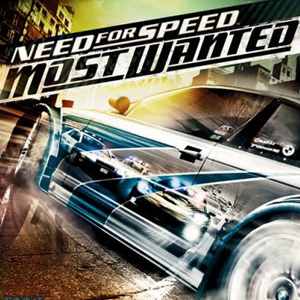
(Below right) Need For Speed Most Wanted Box Art
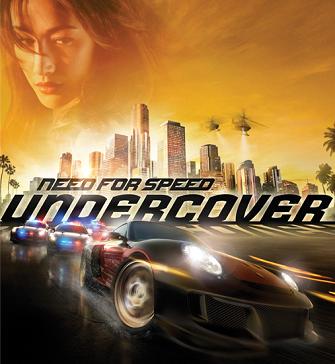
(Below left) Need For Speed Undercover Box Art
 |  |
(Below right) Need For Speed Carbon Box Art
(Below left) PSP equivalent; Need For Speed Carbon: own the city
 |  |
